.png)
Joint Pain Treatment in Lansing, MI
When You Can Point to Where It Hurts
For patients with a specific knee, shoulder, hip, or elbow that has been the problem — and who want a serious non-surgical option before anything more invasive.
Schedule an AppointmentA Stack Built Around the Specific Joint
GAINSWave and AltPoint anchor the joint-pain stack because both are direct, structure-specific tools. The other four fill in around them — circulation, recovery, and adjuncts that show up where the assessment names a reason to add them.
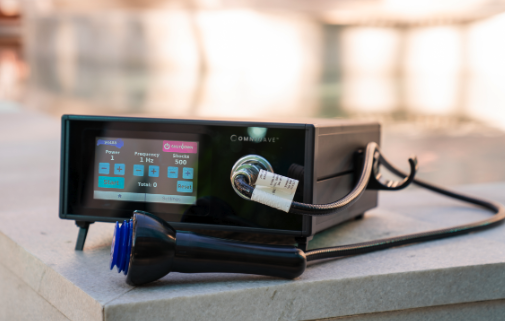
GAINSWave Shockwave Therapy
Concentrated acoustic-electric energy aimed at joint-stabilizing tendons — rotator cuff, patellar, common extensor at the elbow, achilles — and at the soft-tissue envelope around the joint capsule. Often the first-pick modality once the assessment names a structure worth working on.
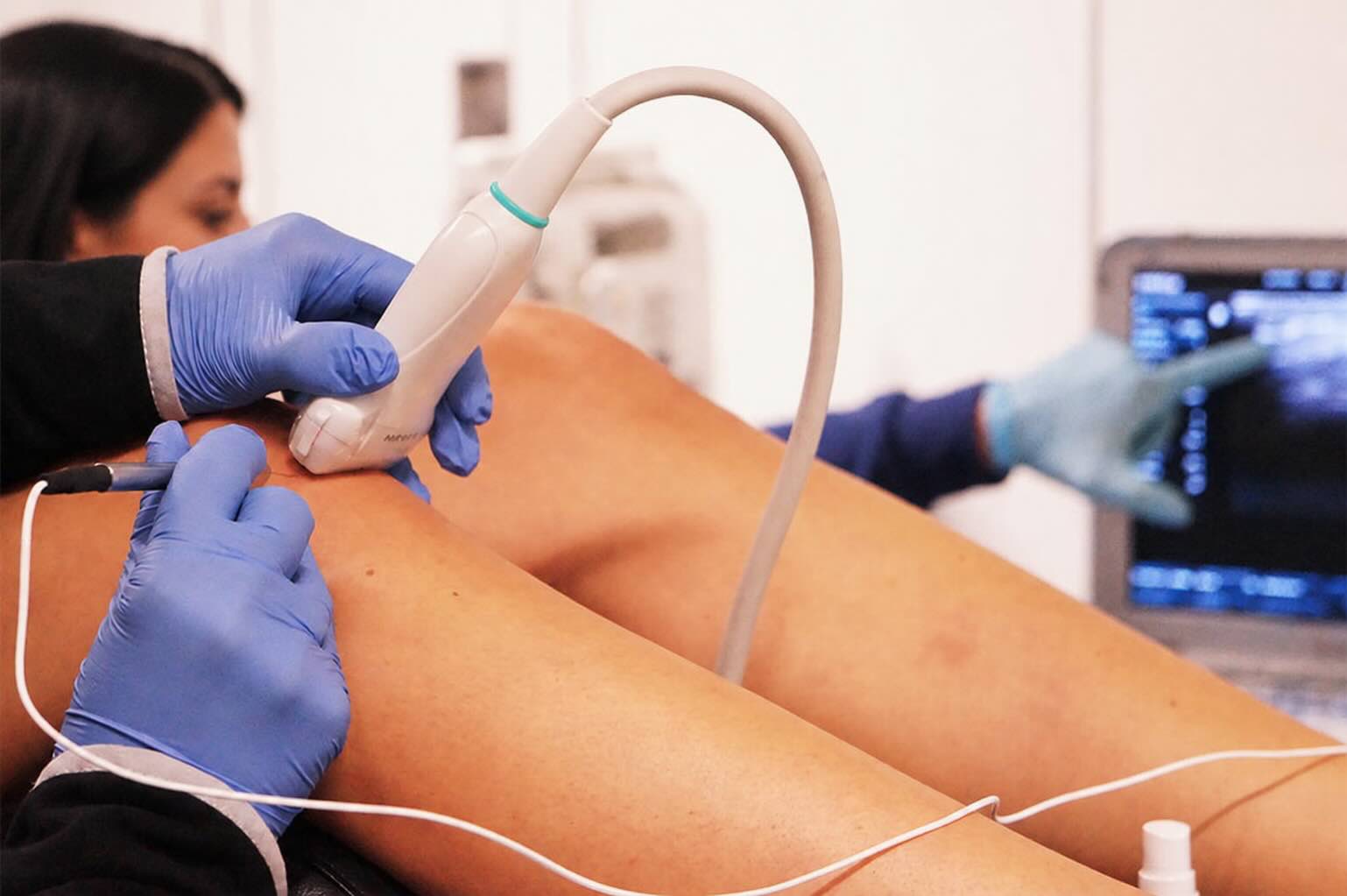
AltPoint Percutaneous Needle Electrolysis
Ultrasound-guided needle reaching the exact ligament, tendon, or scar-tissue structure around a joint that has stalled on conservative care. The precision is what matters here — Dr. Eng works on the structure she sees on the screen, not a presumed location.
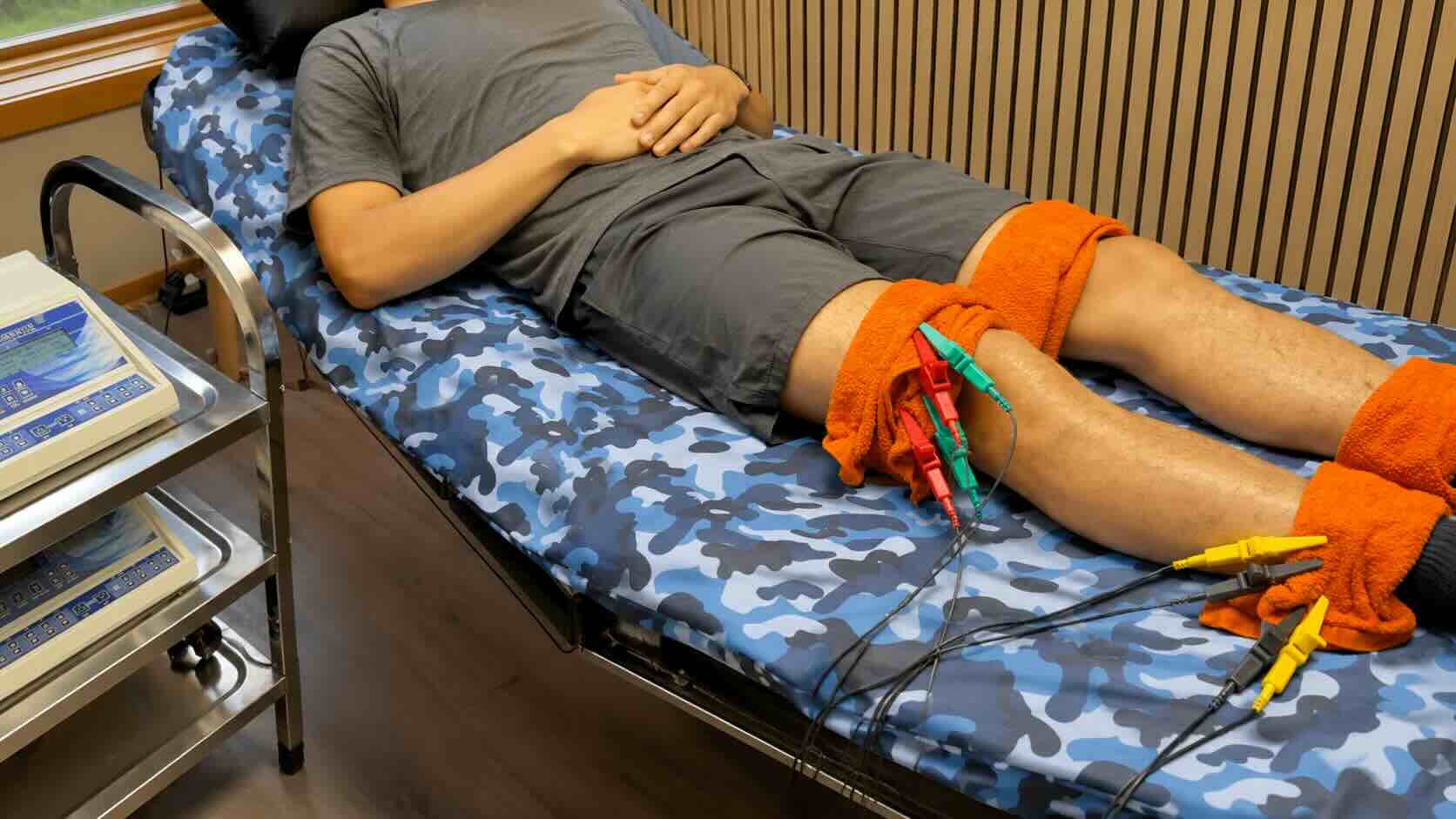
Frequency Specific Microcurrent
Calibrated frequency pairs delivered at subsensory current — particularly useful when an inflammatory contributor is keeping the joint loud, or when a recently-treated structure needs a quiet adjunct between sessions.

BEMER PEMF Therapy
Sessions on a clinical pulsed-field mat that support microcirculation around the joint. Useful as a baseline input that runs underneath the more focal modalities — circulation is what tissue uses to actually do the repair work the other tools are setting up.
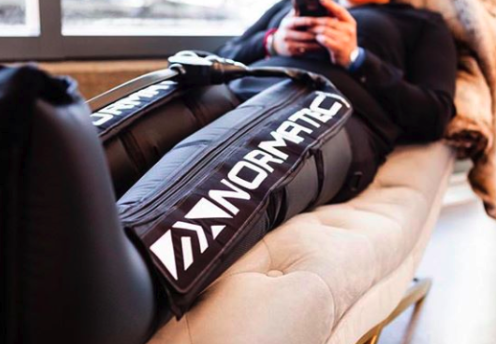
Normatec Compression Therapy
Sequential pneumatic compression on the legs, hips, or arms — especially useful around the larger joints (knee and hip) where post-treatment swelling and stiffness can blunt the work otherwise done in a session.

Red Light Therapy
Whole-body or focal red and near-infrared light at clinically studied wavelengths — a low-impact adjunct designed to support the cellular energetics the joint and surrounding tissue depend on between active treatment days.*
Joint care here belongs to the clinic's non-invasive pain management lane — the hub page collects every tool in that lane, including a few not listed above that occasionally show up in a joint plan when the assessment calls for them.
Understanding Joint Pain
Joint pain has a particular shape. Unlike pain that drifts across the body or shows up everywhere at once, joint pain is local — you can put a finger on it. Knees, shoulders, hips, elbows are the most common culprits; wrists, ankles, and small finger joints show up too. The story usually starts the same way: it has been around longer than you expected, rest helped for a while but did not solve it, ibuprofen takes the edge off without actually changing anything, and you are tired of working around it.
Underneath the symptom, the contributors vary. Some joint pain traces back to an old injury that healed mechanically but never quite re-organized at the tissue level. Some is chronic tendinopathy in the tendons that stabilize the joint — rotator cuff, patellar, common extensor at the elbow. Some is ligament instability that subtly changes how the joint loads through use. Some is mechanical wear that has progressed faster than the rest of the body. Some is an inflammatory contributor sitting underneath everything else. The plan that helps depends on which of those is true for you.
Orthopedic surgery is the right answer for some joint cases — and the team here will tell you so when that is what your picture suggests. For many other cases, a precision non-surgical approach is worth a serious look before more invasive options are committed to. That is the lane this page is about.
A Precision, Non-Surgical Approach
Joint pain treatment in Lansing, MI at this clinic starts with assessment of the specific joint, not a generic pain protocol. Dr. Janet Eng is a board-certified emergency physician with thirty-plus years of clinical experience, fellowship-trained in medical toxicology, with continued training through the University of South Florida Morsani Personalized Medicine Course, A4M, AMMG, IFM, Frequency Specific Microcurrent, and My Injection Training, and currently participating in the AMSKU Ultrasound Fellowship. The ultrasound fellowship matters directly here — joint cases benefit from being able to actually see the tendon, ligament, capsule, and surrounding fluid rather than guessing from palpation. Once the structures involved are visualized and the stage is named (acute, subacute, chronic, post-surgical), the modality choice falls out of the assessment rather than from a one-size-fits-all menu. Different tissue at a different stage calls for different tools.
What to Expect at the Assessment
First visit is an evaluation of the specific joint that has been the problem, not a packaged session. Dr. Eng goes through the history — when it started, how it has changed, what has been tried, what activity or load reproduces it — and examines the joint hands-on. Where it helps, the ultrasound goes on the area so she can see the tendon, ligament, capsule, or fluid behavior directly. By the end of that visit she will tell you straight: whether non-surgical work is a reasonable next step, what a realistic course looks like, or whether your picture warrants orthopedic referral before any modality plan moves forward. Some joint cases are genuinely surgical, and she would rather say so up front than build a treatment plan that does not address what your tissue actually needs.
Questions About Joint Pain Care
In many cases, yes — but not always, and Dr. Eng will be direct about which one your case looks like. A great deal of joint pain responds to focused non-surgical work on the tendons, ligaments, capsule, and inflammatory environment around the joint. Some cases, though — significant structural damage, advanced mechanical wear, or specific patterns on imaging — are genuinely surgical, and she will say so rather than book a series of sessions that are unlikely to move the picture.
Physical therapy is the right place to start for most joint pain, and a well-run PT course is something Dr. Eng respects. What she adds when PT alone has not closed the case is a different set of tools — ultrasound-guided needle electrolysis, focused shockwave, microcurrent — that target the actual damaged tissue at a level of precision PT does not typically have available. The combination is what tends to move cases that have stalled.
No — complementary. If your surgeon has reviewed your imaging and concluded surgery is the right step, Dr. Eng will not contradict that conclusion. Her work is built for the patients whose orthopedist has said surgery is on the table but not yet required, or for those whose case has not been fully worked up on the non-surgical side before more invasive options were proposed.
Through the assessment — ultrasound visualization of the structures, a hands-on exam, and a history that places the pain in its actual context. Some presentations are an ideal fit; others belong with orthopedics, rheumatology, or a more specialized work-up before any modality plan is written. Dr. Eng's job at the first visit is to tell you honestly which category yours falls into, not to find a way to schedule sessions regardless.
Joint pain has many contributors — post-injury tissue that did not heal cleanly, tendinopathy of joint-stabilizing tendons, ligament instability, mechanical wear, and inflammatory drivers among them — and arthritis is one of those contributors, not the whole story. The modalities offered here support the surrounding tissue and may help with pain and function in arthritic joints. They do not reverse structural arthritic change; framing them as supportive rather than curative is honest and important.
Active joint infection, recent fracture, severe structural damage that genuinely warrants surgical repair, certain blood-clotting disorders or anticoagulant medication that has not been coordinated with the prescribing physician, and certain implanted devices in close proximity to the treatment field. Each first-time patient goes through a contraindications screen at intake; if a piece of your picture warrants imaging or a referral before any modality is scheduled, Dr. Eng will say so directly.
Ready to Explore
Your Next Step?
Book a consultation with Dr. Eng to discuss whether functional and regenerative medicine may fit alongside your existing care.