.png)
Tendonitis Treatment in Lansing, MI
Non-Surgical, Return-to-Activity Care
Whether you are nursing a tendon that has been grumbling for months or trying to get back to sport after an injury, the work is the same — get the tissue ready to do its job again.
Schedule an AppointmentTools Used in Tendon and Sports-Injury Recovery
Four tools form the core of how Dr. Eng approaches a tendon problem. Patients seeking sports-injury care in Okemos in a connected form, rather than as isolated single-modality bookings, find a working combination here. The choice and sequence are clinical decisions, not menu picks.
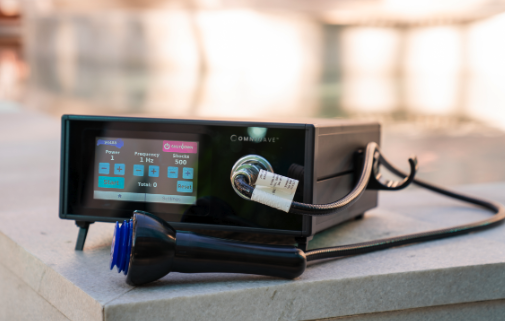
GAINSWave Shockwave Therapy
One of the most-cited modalities used in tendinopathy. A handpiece concentrates an acoustic-electric pulse into the tendon itself — often the starting point for chronic achilles, elbow, or rotator-cuff cases.
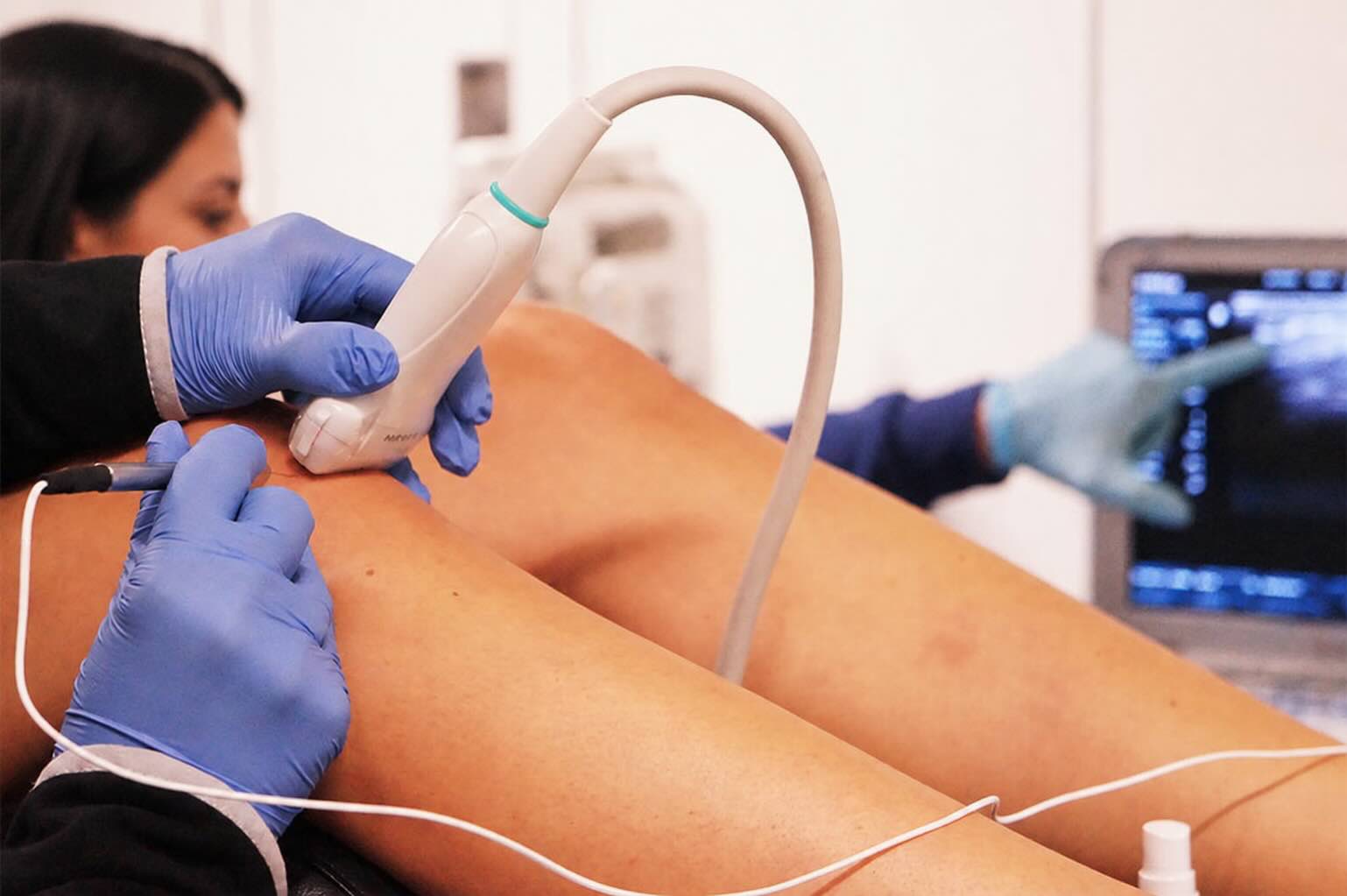
AltPoint Percutaneous Needle Electrolysis
Ultrasound-guided needle electrolysis with one of the strongest peer-reviewed evidence bases for chronic tendinopathy specifically. Commonly run alongside FSM and shockwave for athletes whose tissue has stopped responding to load adjustment alone.
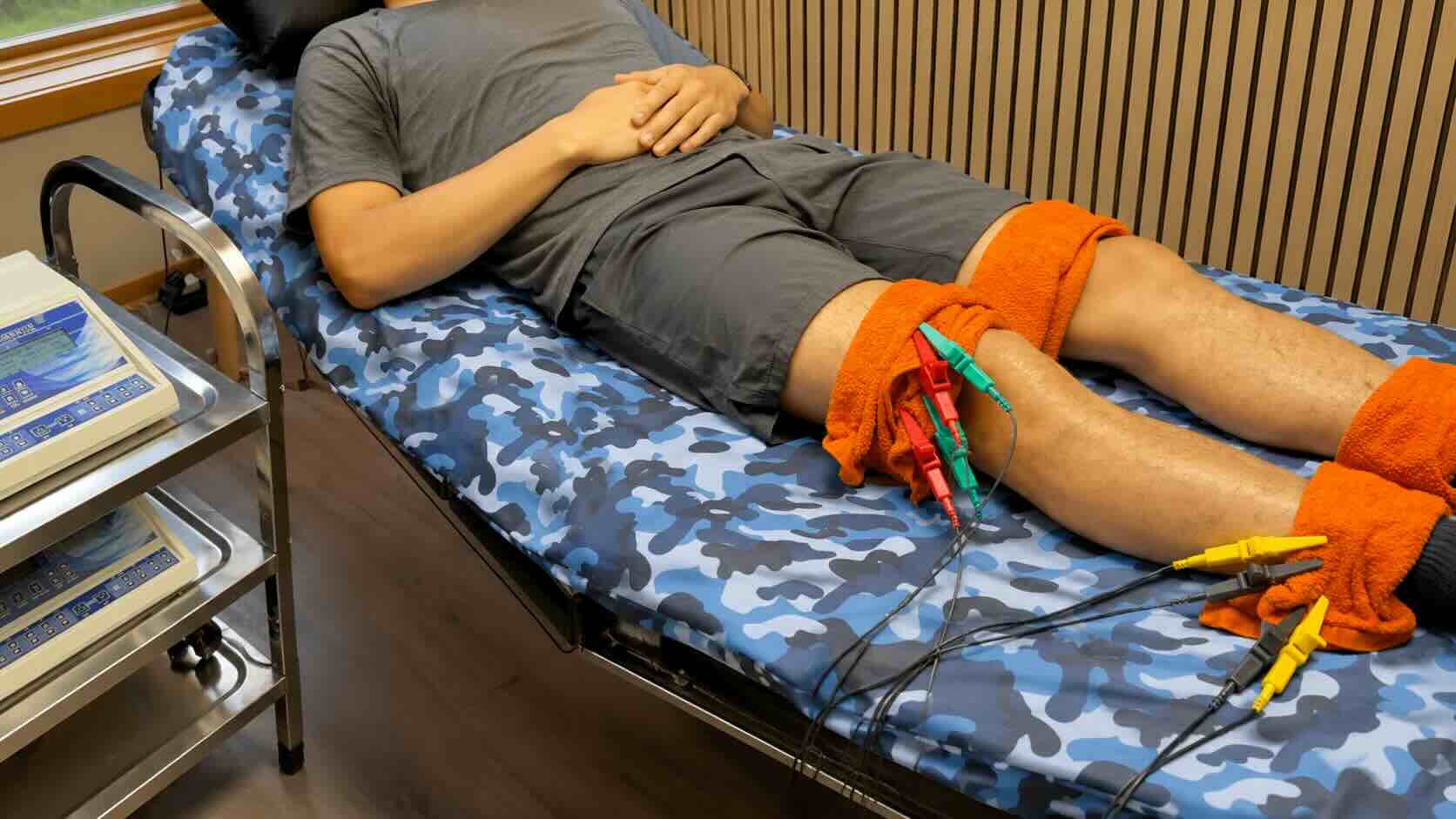
Frequency Specific Microcurrent
A frequency-pair input delivered below the threshold most patients can feel. Useful in the inflammatory phase of an acute sports injury, and in older tendinopathies where calming the tissue is a prerequisite to reloading it.
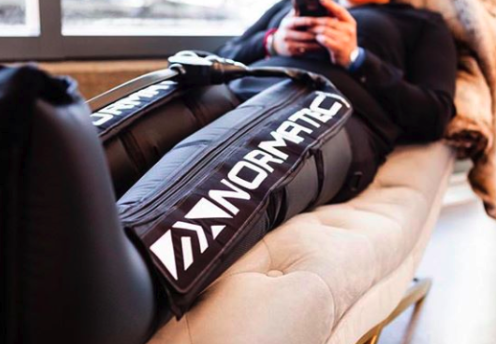
Normatec Compression Therapy
Cyclic pressure that supports lower-body circulation between sessions — particularly relevant for the calf-and-achilles complex and for athletes managing leg-load across a training week.
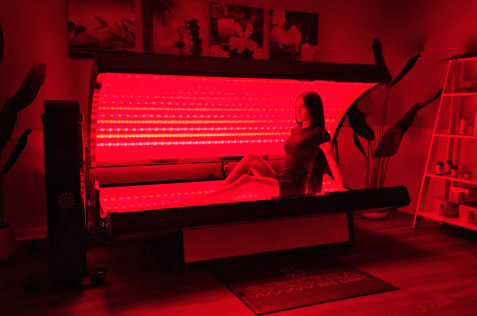
Red Light Therapy
Red and near-infrared light directed at the area — a tissue-level adjunct that helps keep the inflammatory side quiet while loading work happens.
These tools sit inside two related categories at the clinic. The non-invasive pain management hub covers the broader pain-and-tendon side; the functional recovery hub covers the athletic-recovery side. Tendonitis legitimately overlaps both.
Understanding Tendonitis & Sports Injuries
A tendon is the rope-like connector tying muscle to bone. When the load on it outpaces what it can recover from — across a training block, a bad landing, a ramp-up in mileage, or years of repetitive demand — the tissue can shift from healthy adaptation into an inflamed, irritated, or structurally degraded state. The general label is tendonitis when inflammation dominates and tendinopathy when the change is more chronic and structural.
Either pattern can come from a single sports injury or build slowly from overuse. Both share the same frustrating arc: rest helps until you return to the activity, the activity reignites the problem, and the cycle restarts. That cycle is what an actual recovery plan is built to break.
A Recovery-Focused Approach
At Wellness Alternatives, tendonitis treatment in Lansing, MI is shaped by an unusual mix of expertise. Dr. Janet Eng is a board-certified emergency physician with thirty-plus years of clinical experience, fellowship-trained in medical toxicology, with continued training through the University of South Florida Morsani Personalized Medicine Course, A4M, AMMG, IFM, Frequency Specific Microcurrent, and My Injection Training, and currently participating in the AMSKU Ultrasound Fellowship — and her named clinical interest in sports medicine and recovery shows up directly here. The goal is return-to-activity, not just symptom quiet, and that changes how a plan is built: paced around what your body needs to tolerate the load you actually care about getting back to, rather than around making the next office visit comfortable in isolation.
What the First Appointment Covers
The opening visit is a real evaluation, not a booked treatment slot. Dr. Eng walks the injury timeline with you — when it started, what activity sits on the other end of the recovery, what has already been tried — and examines the tendon itself. If imaging or a referral should happen elsewhere (orthopedic evaluation, an MRI, a sports-medicine consult), she names that up front. If the case is a good fit for the work here, the plan is paced against your return-to-activity timeline, not a stock package.
Questions About Tendon & Sports-Injury Care
Yes — and it has a fairly long clinical track record for chronic tendinopathy specifically, which is why GAINSWave shows up first in our card grid. Shockwave is not a universal answer, and acute injuries are sometimes a different conversation. Dr. Eng will tell you whether your tendon fits the pattern the research supports.
Not a replacement — a complement. If you are working with a sports-medicine physician or an orthopedist on the injury, that relationship continues; Dr. Eng's role is to layer in tissue-level work alongside what they are already doing. When she thinks a referral or further evaluation is the right move, she says so directly.
Honest answer: it depends on the tendon, how chronic the case is, and how the tissue responds. Some patients notice meaningful change within a few weeks; others sit with a structured course over a couple of months. No clinician being straight with you will promise a fixed timeline before they have examined the area.
The approach adapts. A chronic tendinopathy is a structural problem and usually responds to a longer course; a fresh sprain or strain is closer to an inflammatory-and-loading question, where the tools and timing are calibrated differently. The first visit sorts which kind of case yours is.
Athletes between events trying to come back smarter, active adults dealing with stubborn overuse, and patients pursuing tendon injury recovery in Michigan who have already tried first-line steps without the result they wanted. The clinic serves Okemos, East Lansing, Lansing, and patients seeking non-surgical tendonitis Lansing options outside the typical orthopedic pathway often start here.
Ready to Explore
Your Next Step?
Book a consultation with Dr. Eng to discuss whether functional and regenerative medicine may fit alongside your existing care.