.png)
The Cove Brain Reset Chair
in Lansing, Michigan
For patients overwhelmed, scattered, or looking to reset the nervous system — brain reset therapy in Lansing, MI on a vibration-based chair designed to support dopamine balance and calm.
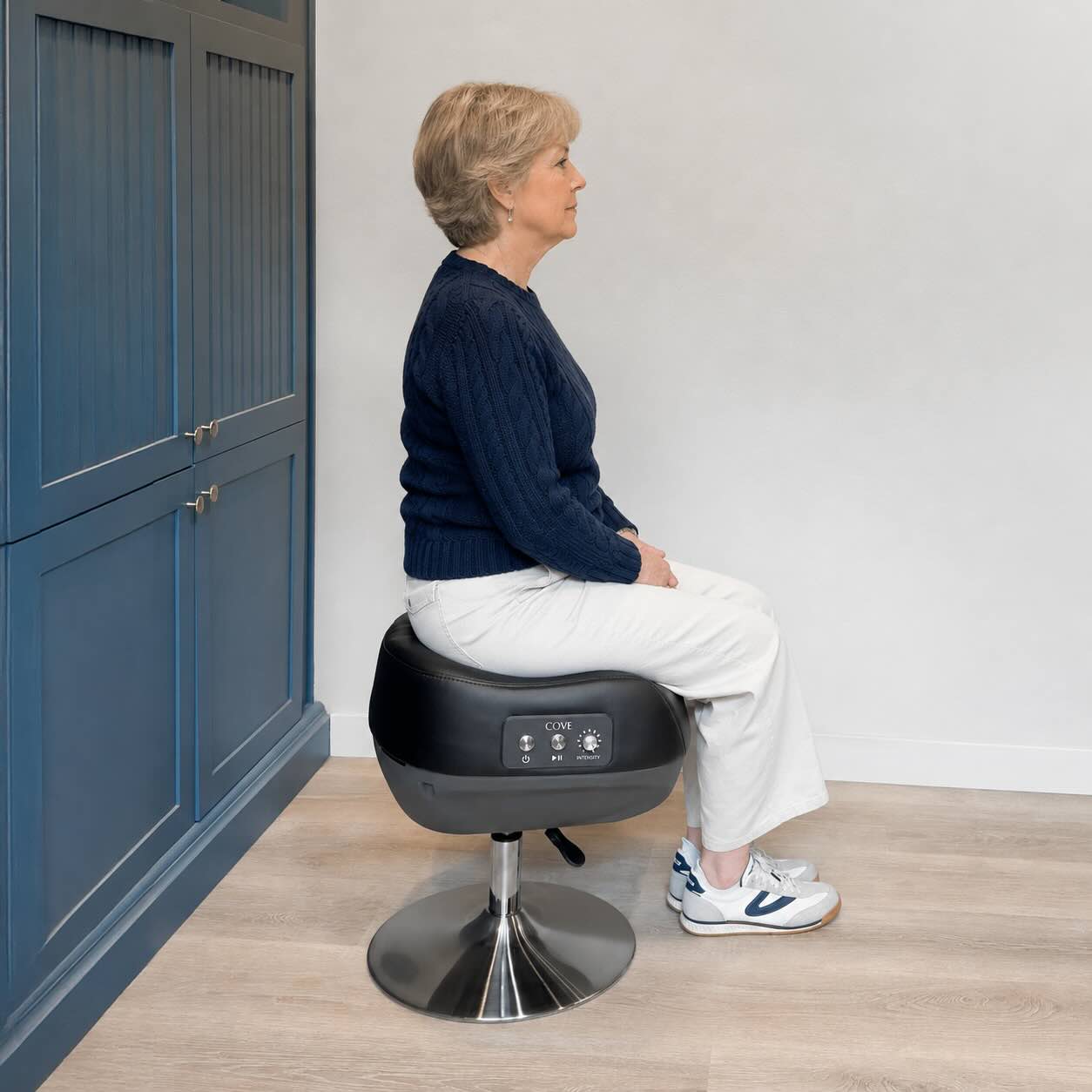
What Is the Cove Brain Reset Chair?
The Cove Brain Reset Chair is a vibration-based neuromodulation device — a piece of clinical equipment you sit in, fully clothed, for a short, quiet session. Two offset motors generate a low-frequency 80 Hz pulse that travels up the spine and gently stimulates the brainstem, sustained long enough to produce a measurable shift in how the body holds tension.
Formerly marketed as the Neuro-Nova Dopamine Chair, the same device targets dopamine and GABA — the neurotransmitters governing motivation, focus, and calm. A session is short on purpose: ten minutes seated, then back to your day. Per the manufacturer, the platform is backed by roughly eight years of development and NIH-sponsored studies, with effects that can carry six to seven hours.
Calmer Focus, Steadier Reset
Most patients arrive looking for one of a small set of outcomes — sharper focus on a heavy day, a softer wind-down at night, or a baseline that isn't running so hot. The session is designed around those. Cove is also one of the lead modalities Dr. Eng reaches for on the brain fog and focus side of her practice, and on the stress and nervous-system support side where it anchors the modality work alongside clinical investigation.
- Designed to support dopamine balance through brainstem stimulation rather than pharmaceuticals*
- May help patients find calmer focus during periods of high cognitive load or scattered attention*
- Designed to support the nervous system in shifting from a stress-dominant state toward a more regulated baseline*
- Many patients find Cove sessions complement wind-down quality before sleep when used earlier in the evening*
- Designed to support clearer thinking on the days brain fog or mental fatigue would otherwise dominate*
- Offered as a complement — never a replacement — for existing mental health care or medication you already have in place
What to Expect at a Brain Reset Therapy Session in Lansing, MI
You arrive, sit in the chair, and Dr. Eng checks the program is set to the parameters she wants for your visit. The vibration starts smoothly — there is no startle moment, no escalation — and runs at its 80 Hz pulse for ten minutes. Most patients are surprised by how quiet the experience is. The sensation is more like a low harmonic hum traveling up the back than what people imagine when they hear the word "vibration." There is nothing to do during the session: no app to follow, no breathing exercise to perform, no screen to watch. Many patients close their eyes; some sit with them open. Either is fine.
Why the spine matters: the brainstem sits at the top of the spinal column, and the vibration the chair delivers travels up through the soft tissue surrounding the vertebrae before it reaches that region. Stimulating the brainstem is what the manufacturer's research cites as the mechanism behind the neurotransmitter shift — a bottom-up route to nervous-system change rather than the top-down one cognitive techniques use.
After the session, plan for the rest of the day knowing the effect can persist for several hours. Patients often book Cove in the morning before high-focus work, in the late afternoon to take the edge off the end of a heavy day, or in the early evening when the goal is a quieter wind-down toward sleep. Cadence is something Dr. Eng calibrates with you based on what you are after.
Not appropriate for everyone. Patients with pacemakers, implanted electronic devices such as neurostimulators or cochlear implants, recent head, neck, or spine injuries, a history of seizures, or who are currently pregnant should not use the chair. Dr. Eng will review your medical history before clearing a first session and will say so plainly if Cove is not the right tool for your situation.
Why Wellness Alternatives
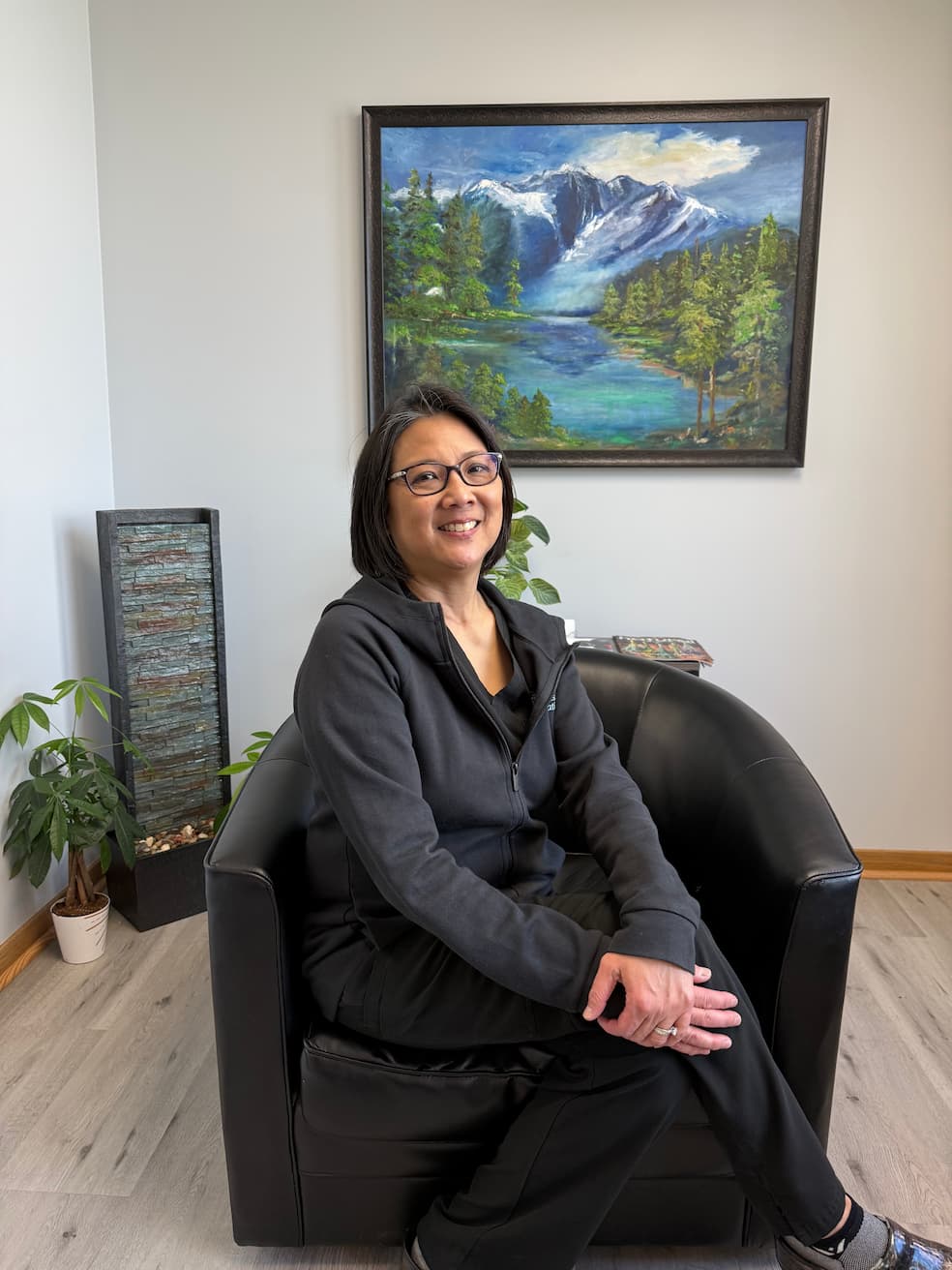
Dr. Janet Eng is a board-certified emergency physician with thirty-plus years of clinical experience, fellowship-trained in medical toxicology, with continued training through the University of South Florida Morsani Personalized Medicine Course, A4M, AMMG, IFM, Frequency Specific Microcurrent, and My Injection Training, and currently participating in the AMSKU Ultrasound Fellowship. She selected the Cove Brain Reset Chair for the clinic because its research base — roughly eight years of development with NIH-sponsored studies behind it, per the manufacturer — meets her threshold for what enters Wellness Alternatives in the first place.
Cove fits the broader Alternative Medicine work she does: tools chosen for their upstream effect, sequenced into a plan rather than offered as standalone wellness sessions. For some patients, Cove sits at the center of a nervous-system-focused plan; for others, it complements work that is mostly happening elsewhere. The decision about where it fits is hers, made against your specific situation.
Dopamine chair Okemos patients are searching for is a real and growing question in Mid-Michigan, and neuromodulation therapy Michigan options outside of large academic centers are limited. Wellness Alternatives is one of the few clinics in the state offering this device — not the first, and not claimed as such, but a venue where you get a physician sitting with you through the protocol design.
Questions About the Cove Brain Reset Chair
Gentle and harmonic, not jarring. Two offset motors generate a low-frequency pulse you feel as a steady hum traveling up the seat back rather than as a shaking sensation. Many patients describe it as something between a deep massage and a meditative quieting — surprising at first because the effect on the nervous system tends to outpace what the body feels physically.
People with pacemakers, implanted neurostimulators, or other implanted electronic devices should not use the chair. The same applies to anyone with a recent head, neck, or spine injury, a seizure history, or who is currently pregnant. Dr. Eng will review your medical history at intake and clear (or decline to clear) the session before booking.
Cadence depends on what you are using the session for. Patients using Cove for general stress resilience often run a session weekly; people pairing it with a specific cognitive or sleep goal may run more frequently in a short cycle. Per the manufacturer, effects from a single 10-minute session can carry six to seven hours, so timing the session around when you most want the calm or focus tends to matter as much as how often you sit.
No. The Cove session is supportive nervous-system care, not a treatment for anxiety, depression, ADHD, or any other diagnosed condition. It is offered as a complement to whatever mental health care you already have in place with your other providers — never as a substitute. If you are on medication or working with a therapist, keep that care intact; Dr. Eng will coordinate around it rather than around it.
Both work on the nervous system, but through different paths. Meditation engages a top-down approach — you direct attention and the body follows. The Cove session works bottom-up: an 80 Hz vibration traveling up the spine stimulates the brainstem directly, supporting changes in neurotransmitter balance without requiring you to do anything cognitive. Many patients use both, and find each helps the other.
Adults running hot — high stress load, scattered focus, trouble winding down at night, or a low baseline of calm. Patients using Cove also include people who want a non-pharmaceutical nervous-system reset between life chapters, those looking to support sleep onset, and patients exploring dopamine-and-focus-supportive care without stimulants. People dealing with active mental health diagnoses should keep that care as the primary plan and use Cove as a complementary input only.
Ready to Explore
Your Next Step?
Book a consultation with Dr. Eng to discuss whether functional and regenerative medicine may fit alongside your existing care.