.png)
AltPoint Percutaneous Needle Electrolysis
in Lansing, Michigan
For patients with chronic tendon, ligament, or scar-tissue pain who have been told surgery is the answer and want a serious non-surgical option to try first — percutaneous needle electrolysis in Lansing, MI, performed under live ultrasound guidance.
Schedule an Appointment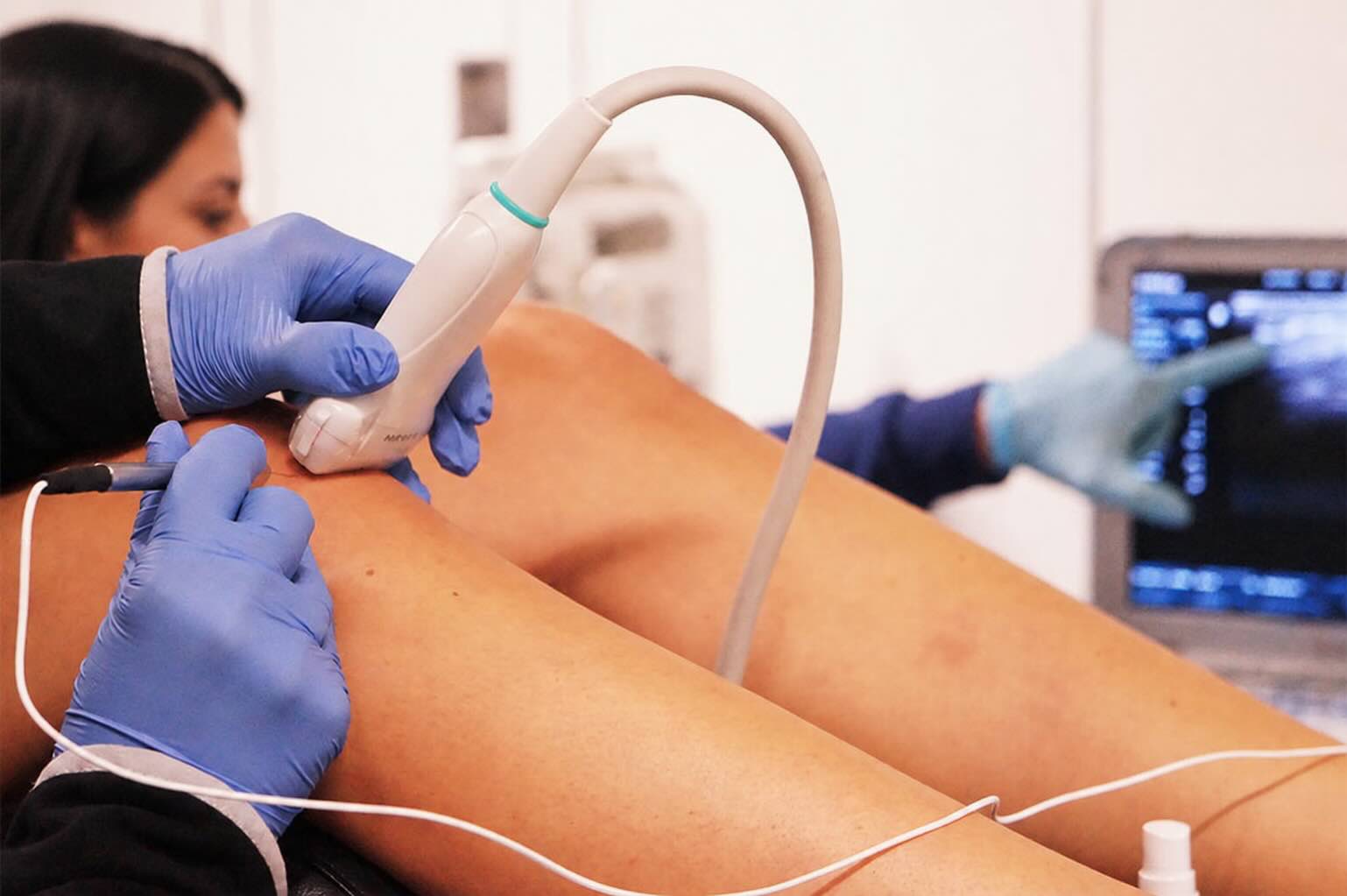
What Is AltPoint Percutaneous Needle Electrolysis?
Percutaneous Needle Electrolysis — PNE for short — is an ultrasound-guided procedure that delivers a precisely targeted galvanic electric current through a sterile needle into damaged soft tissue. AltPoint is the branded refinement of the method used at Wellness Alternatives. It crosses the skin with a needle, but the working mechanism is electrical, not chemical — nothing is injected.
When the body fails to repair a tendon properly, the tissue settles into a disorganized state that no longer generates the signal it needs to remodel. AltPoint introduces a controlled, localized inflammatory event right into the structure, giving the body a reason to re-engage the repair it stalled on — all under live ultrasound so Dr. Eng treats the exact structure she sees.
Chronic Tendon, Ligament, and Scar-Tissue Cases
AltPoint is not a general-pain treatment. It is used in specific situations — usually chronic tendinopathy patterns that physical therapy and conservative care have not resolved, ligament injuries with stubborn pain or stiffness, or scar tissue limiting function after a prior injury or procedure. Patients arriving with a specific painful joint can read how AltPoint fits a joint-focused plan on the joint pain condition page.
- Used for chronic tendinopathy patterns that conservative care has not resolved*
- May support recovery in select ligament injuries and post-injury scar tissue*
- Supported by a growing peer-reviewed evidence base in the PNE clinical literature*
- Designed around ultrasound precision — Dr. Eng works on the exact structure she sees on the screen
- Frequently sought as a non-surgical option to consider first in appropriate cases
- Pairs naturally with frequency specific microcurrent and shockwave inside a coordinated protocol
What to Expect at a PNE Session
A first visit begins with assessment rather than procedure. Dr. Eng reviews your history, looks at any imaging you bring, and then puts the ultrasound on the area she's been told about — partly to confirm the target structure is what was described, partly to look for anything imaging in another setting may have missed. From there, she decides whether AltPoint is the right tool, whether a different modality fits better, or whether the case warrants a surgical referral before anything else is tried. That triage step matters; it is the part of the visit that prevents AltPoint from being used where it does not belong.
If the procedure goes forward, the area is cleaned and prepared, the needle is placed under live ultrasound guidance to the specific structure being treated, and the galvanic current is delivered in short, controlled bursts. You feel each burst as a brief, deep cramp or pull at the target — distinctive but transient. The entire procedure portion is usually short — often well under 20 minutes — though the visit itself runs longer with the imaging assessment and post-procedure debrief.
Afterward, you walk out under your own power. Most patients return to ordinary activity the same day; high-load training on the treated structure is paused for a defined window Dr. Eng sets case-by-case. AltPoint is generally delivered as a short series across several weeks rather than as a single visit, with check-in points where she reassesses on ultrasound to see how the tissue is responding before deciding whether to continue.
Inside a broader plan, AltPoint is rarely the only tool. It sequences naturally alongside frequency specific microcurrent — the AltPoint-plus-FSM pairing is well-represented in the published clinical literature — and alongside shockwave for cases where surface-level acoustic energy adds something the focal needling does not. The combination is set by Dr. Eng based on what each structure needs.
Why Wellness Alternatives
Dr. Eng was personally trained in AltPoint by Dr. Sean Altman, the modality's founder. This matters more than it might sound. AltPoint is a precision-dependent procedure — the right needle placement, the right galvanic dose, the right reading of the ultrasound image, all calibrated to the specific structure being treated. Generic ultrasound-guided needling is one thing; the AltPoint methodology specifically, as Dr. Altman developed it, is another. Direct training under the physician who built the technique gives Dr. Eng a level of methodological fidelity that is uncommon for this procedure. Most clinics offering needle-based soft-tissue work in the area are not trained this way; she is.
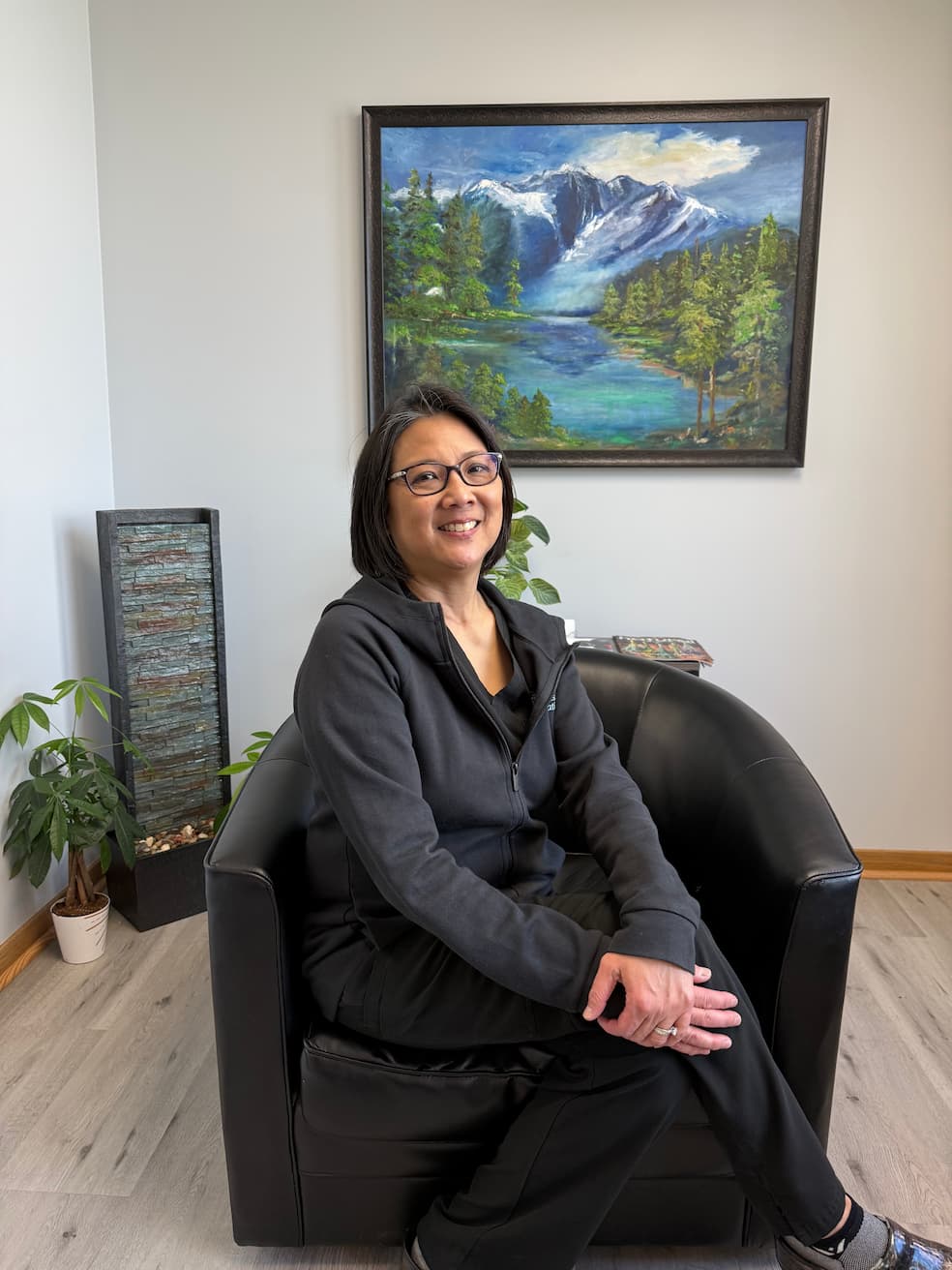
Beyond AltPoint, Dr. Janet Eng is a board-certified emergency physician with thirty-plus years of clinical experience, fellowship-trained in medical toxicology, with continued training through the University of South Florida Morsani Personalized Medicine Course, A4M, AMMG, IFM, Frequency Specific Microcurrent, and My Injection Training, and currently participating in the AMSKU Ultrasound Fellowship. The ultrasound fellowship is directly relevant — every AltPoint procedure she runs is dependent on the imaging interpretation underneath it.
AltPoint sits inside her broader Non-Invasive Pain Management work — sequenced with shockwave, microcurrent, and PEMF when the case calls for a layered plan, used alone when a single targeted procedure is what the structure needs.
Questions About AltPoint and PNE
Acupuncture and dry needling are point-based techniques that work by inserting a thin needle into a tissue or trigger point — no imaging, no electric current. AltPoint percutaneous needle electrolysis is something different in kind: the needle is placed under live ultrasound guidance directly into a specific structure Dr. Eng has identified on the screen, and a controlled galvanic current is then delivered through the needle to that exact target. The current is what does the clinical work; the ultrasound is what makes the placement precise. It is a procedure rather than a points-based therapy.
There is a sensation during current delivery — most patients describe it as a brief, deep cramp or pulling at the target structure that builds for a few seconds and then quickly subsides. It is uncomfortable rather than sharp, and Dr. Eng controls the dose and the timing throughout. People with very high needle aversion sometimes find it not a fit; most people tolerate it without difficulty.
PNE is usually delivered as a short course rather than a single visit — most common protocols run somewhere in the range of four to eight sessions spaced about a week apart, with the exact number depending on the structure being treated, how chronic the issue is, and how the tissue responds along the way. Dr. Eng will outline the cadence after she visualizes the target on ultrasound at the first visit.
No. AltPoint can be a useful non-surgical option to try first in carefully selected chronic tendon, ligament, and scar-tissue cases — and many patients do avoid surgery this way — but the procedure is not a guarantee, and some cases genuinely do require surgical management. Dr. Eng will tell you honestly if she thinks your situation is one of them, and she will refer you for surgical evaluation when that is the right call. The honesty about that line is part of why patients trust the work she does in this category.
Active infection or open wound at the planned needle site, certain metallic implants in close proximity to the target structure, anticoagulant medication that has not been cleared with your prescribing physician, current pregnancy, and severe needle phobia are the most common reasons Dr. Eng will not perform AltPoint at a given visit. Each first-time patient walks through a screening conversation at intake — medications, prior procedures near the target, imaging history — so contraindications are caught well before the needle ever comes out.
Both are used for chronic tendon and soft-tissue problems, but they work through different mechanisms and at different depths. Shockwave delivers acoustic energy through the skin to a region of tissue; AltPoint delivers galvanic current through a needle to a specific point inside a structure visualized on ultrasound. They are complementary rather than redundant — Dr. Eng often sequences them together in a protocol, and the published clinical literature pairs them often.
Ready to Explore
Your Next Step?
Book a consultation with Dr. Eng to discuss whether functional and regenerative medicine may fit alongside your existing care.