.png)
Ultraviolet Blood Irradiation in Lansing, MI
Photobiomodulation, Delivered Intravenously
For patients exploring light-based therapies that act at the level of circulating blood — used here as supportive care inside a broader functional medicine plan, not as a stand-alone protocol.
Schedule an Appointment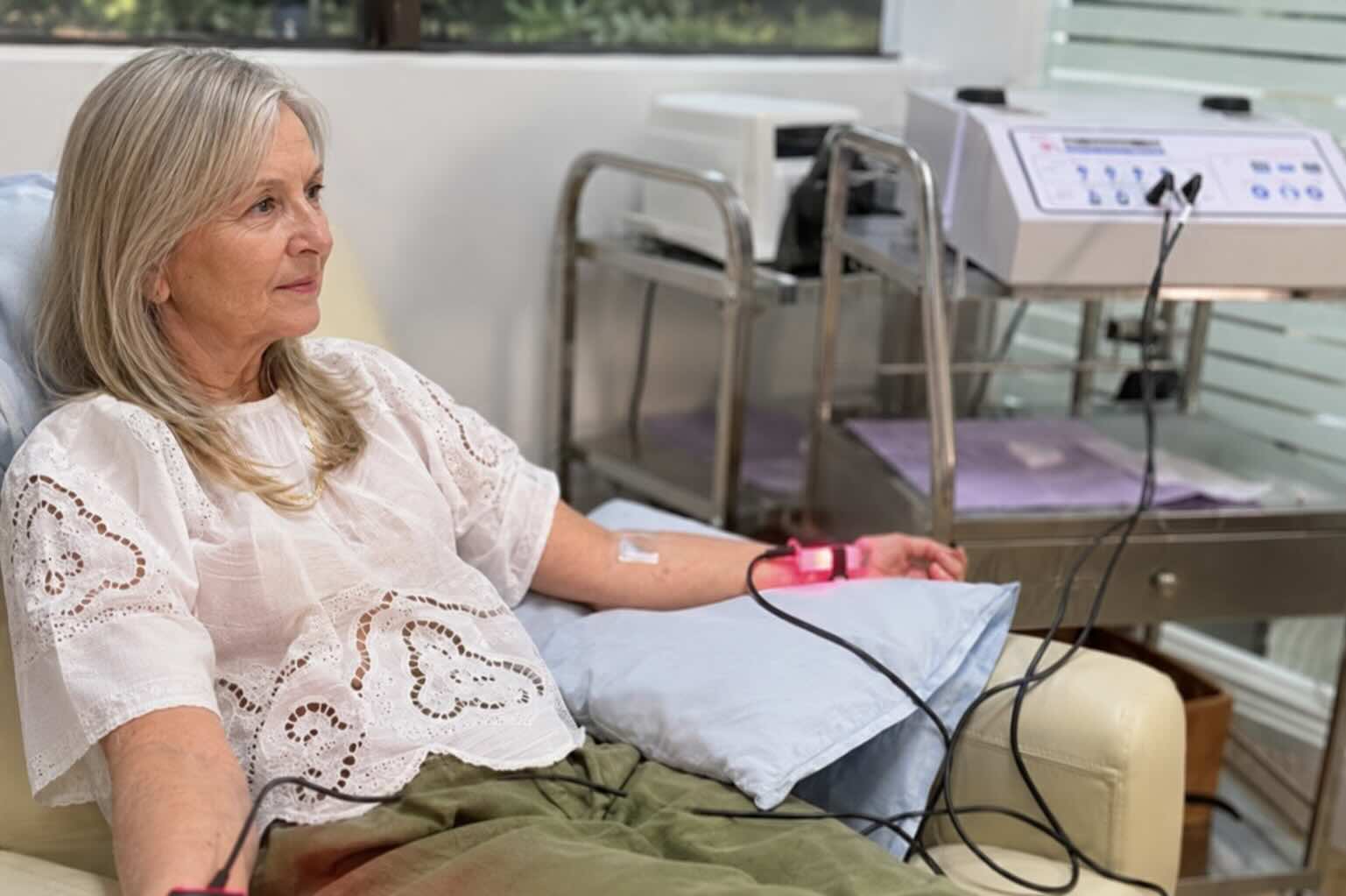
What Is Hemealumen UVBI?
Hemealumen UVBI is the modern, FDA-listed implementation of a procedure with a long history: ultraviolet blood irradiation. A small portion of a patient's blood — about five percent of total volume — is drawn through a sterile IV line into a sealed quartz chamber, passed through a calibrated mix of light wavelengths (ultraviolet plus visible-spectrum red, amber, green, and blue LEDs), and returned through the same line. A typical session runs 30 to 60 minutes.
The mechanism Dr. Eng works with is photobiomodulation — how specific wavelengths of light influence cellular function — here acting on the immune and inflammatory cells the blood carries. Used in American hospitals in the 1940s and 50s, it has returned to functional medicine as photobiomodulation research has matured.
Conservative, Defensible Use Cases
UVBI is used here as supportive care in a focused set of clinical contexts. Dr. Eng frames it as a tool inside a plan, never as a cure or as a stand-alone solution to any specific diagnosis.
- May support immune function in chronic-infection and immune-dysregulation contexts*
- May support inflammation modulation alongside conventional care*
- Designed to be delivered through a standard IV line — often combined with an IV nutrition session in the same visit
- Uses a defined combination of UV and visible-spectrum wavelengths inside a sealed quartz exposure chamber
- Carries a clinical history dating to the 1940s, with renewed functional-medicine interest informed by emerging contemporary research*
- Offered as one supportive tool inside a broader plan — never as a standalone treatment for any specific diagnosis
What to Expect at a Session
From the patient's chair, a Hemealumen session feels close to a standard IV nutrition visit. After a brief check-in, sterile IV access is established the way Dr. Eng would for any infusion. Once the line is in, the Hemealumen device handles the rest: blood draws out into the quartz chamber, passes through the light exposure cycle, and returns to the body through the same line. The entire process is closed-circuit and runs at a measured pace; a typical visit lasts 30 to 60 minutes. Most patients tolerate the procedure well and resume normal activity afterward.
Because the IV access is already in place, many patients schedule a UVBI session in the same visit as a targeted nutrient infusion — the line stays in, the nutrient bag runs alongside or after the Hemealumen cycle, and the visit becomes a single integrated treatment rather than two separate appointments. Whether to combine them, and which nutrient protocol fits the broader plan, is Dr. Eng's call based on what your situation calls for.
UVBI is rarely a one-and-done intervention. The typical clinical pattern is a series — most often six to ten sessions across several weeks — with the cadence and total count set by Dr. Eng against what the plan is supporting. She will be honest at the check-in points if the procedure is not adding the value she hoped for in your case.
Why Wellness Alternatives
Dr. Janet Eng is a board-certified emergency physician with thirty-plus years of clinical experience, fellowship-trained in medical toxicology, with continued training through the University of South Florida Morsani Personalized Medicine Course, A4M, AMMG, IFM, Frequency Specific Microcurrent, and My Injection Training, and currently participating in the AMSKU Ultrasound Fellowship. UVBI sits inside the integrative side of her practice rather than as a marquee offering — it is one supportive tool, used in a specific subset of clinical situations, and always layered onto whatever conventional or specialist care a patient is already receiving.
Where some clinics offering UVBI lean into broad curative claims, Wellness Alternatives intentionally does not. Dr. Eng will tell you honestly if she does not think UVBI is the right tool for your clinical picture, and she will refer to or coordinate with the appropriate specialist when the case calls for that. The procedure earns its place in a plan by clinical fit, not by marketing.
Questions About Hemealumen UVBI
Dr. Eng uses Hemealumen UVBI as supportive care in a small set of contexts: chronic-infection presentations (including Lyme and other persistent infections), immune dysregulation, and chronic inflammatory pictures where the body's response to its environment is part of the story. The page does not claim cures or specific outcomes — these are clinical contexts where the procedure may have a supportive role inside a broader plan. Whether it is appropriate for your specific situation is a decision Dr. Eng makes at consultation against your history, your current care team, and what is realistic.
A small portion of your blood — roughly five percent of total volume — is drawn through a sterile IV line into the Hemealumen device's quartz exposure chamber. Inside the chamber the blood is exposed to a specific combination of wavelengths: UV-A and UV-C in the ultraviolet range, plus red, amber, green, and blue light from LED emitters. The treated blood is then returned to circulation through the same IV line. The clinical effect is described in the photobiomodulation literature as a signaling effect — the treated blood circulates and may influence broader immune and inflammatory function — rather than as a direct microbe-targeting action.
No, and Dr. Eng will be direct about that. Hemealumen UVBI is a supportive therapy that may complement conventional care for chronic-infection and immune-related conditions — it is not a curative treatment, not a stand-alone protocol, and not a substitute for infectious disease, oncology, rheumatology, or any other specialist care you are receiving. If you are working with another specialist on a chronic condition, that care remains primary; UVBI runs alongside it where Dr. Eng decides the clinical case supports adding it.
Most patients receive a series rather than a single visit — a common pattern is six to ten sessions across several weeks, with the exact cadence calibrated to the clinical picture and how a patient is responding along the way. Some plans run shorter; some maintenance protocols extend longer. Dr. Eng sets the schedule against your specific situation rather than against a packaged program.
Typically out-of-network. The office can produce superbills for patients whose plans offer out-of-network reimbursement consideration, and HSA / FSA funds are accepted toward the work. Call 517-719-0730 for current per-session rates and any package structure.
Patients with photosensitivity conditions, those currently taking photosensitizing medications, patients with porphyria, active pregnancy, and certain blood disorders are the most common reasons Dr. Eng will decline to perform Hemealumen UVBI at a given visit. Patients in acute medical crisis, or those undergoing active oncology treatment, should keep their primary specialists as the lead and confirm with them before any supportive work like UVBI is layered in. Each first-time patient walks through a contraindications screen at intake before any session is scheduled.
Ready to Explore
Your Next Step?
Book a consultation with Dr. Eng to discuss whether functional and regenerative medicine may fit alongside your existing care.